The KILLER philosophy of MMA (Mixed Martial Arts)
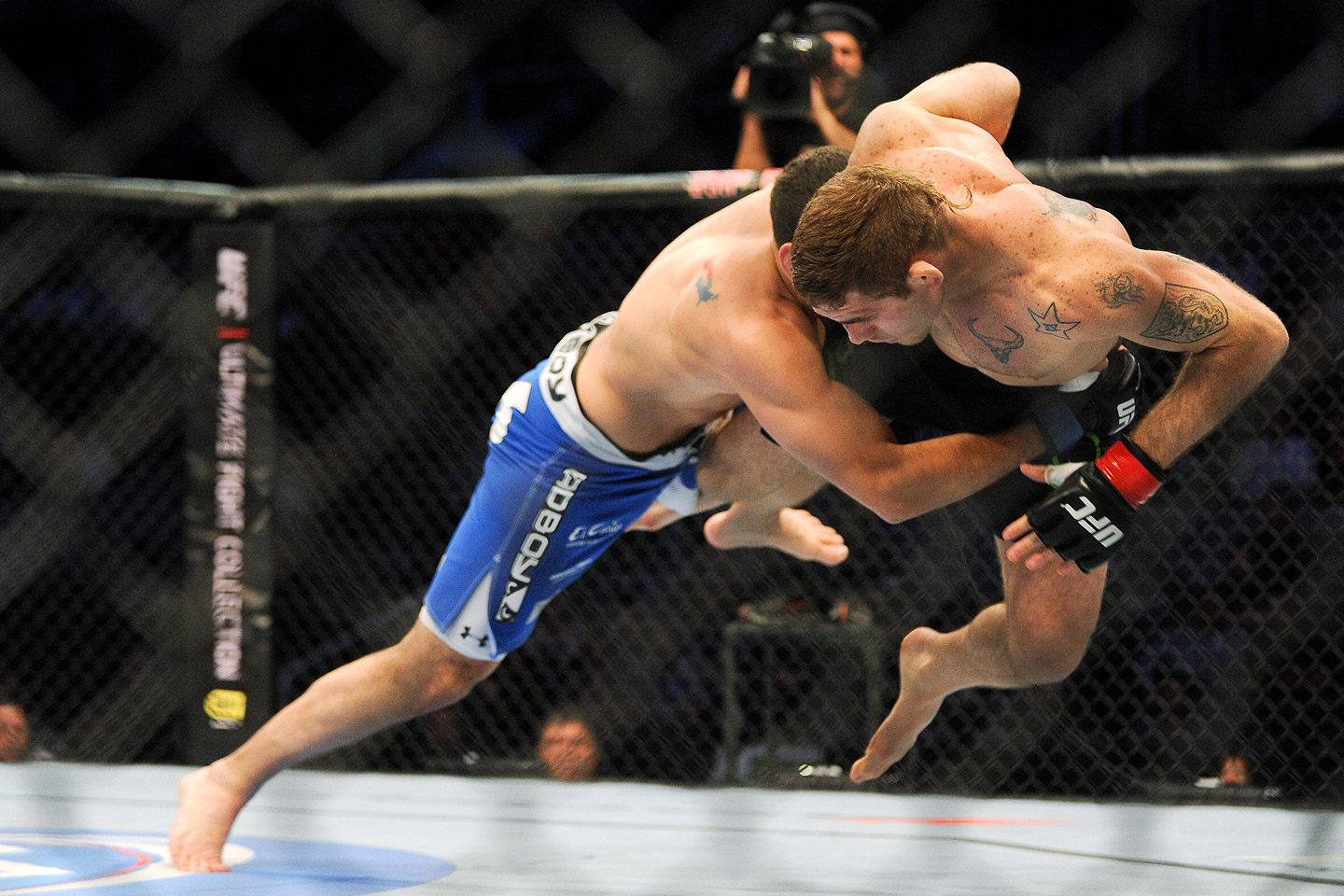
So if you are really serious about becoming an MMA fighter, you should equip yourself with all these skills. But remember that such basic training doesn’t end there, there are more work that you must do to be a top-notch fighter.
So what does it take to make it in the mixed martial arts?
Do you really have to be super human? The subject is one of debate, but you do have to train real hard and intensely. Training and eventually competing in the MMA will take much more than just building muscle. If that’s all it took, I could just write an article about Body Building and call it a day since I have a background in Muscle Building.
But there’s much more to it than this. Here are some things you should consider incorporating into any successful MMA Strength Training Routine.
Becoming an MMA Fighter requires you to be a Boxer, a Kick Boxer, a Wrestler as well as an expert in Judo. Not only do you have to be strong, you have to be quick and have endurance all at the same time. Also a tip I learned was if you don’t have a punching bag available, some people will jerry rig duct tape around towels around a rafter and use that. But nowadays you can buy punching bags that support themselves without having to hang them from a rafter like the old days.
Shin pads made for mixed martial arts have good mobility properties and are sturdy. Some are of the opinion that mixed martial arts shin pads lack protection simply because it has a thin layer of foam that only close up the shin area. Leather is used to manufacture the striking region although a tight fitting slim neoprene leg sleeve ensures the guard doesn’t move around.
These are the MMA combat basics. While it might seem a little harsh when compared to other sports out there, it is also a fascinating blend of many other sports and fighting styles, which increases its appeal. If a fighter can successfully utilize all three MMA combat basics–stand-up fighting, clinching, and ground game–while also maximizing the strength and endurance of his physical form, he will be a tough contender. Next time you check out MMA, watch for all of this; maybe you’ll see why it’s such a popular modern sport.
If you have been training for MMA for a while now, you will likely be familiar with the conditioning components covered in this article. I have other articles that go into more depth on these aspects and others concerning your MMA conditioning and your conditioning program, which should ensure that you never get tired in matches. If you are still figuring things out and not completely sure about how to condition for MMA, here are some basic keys for you, to ensure that you are not missing any valuable components:
1. HIIT – train what you need.2. Circuit Training – train more of what you need.3. Sparring – train what you do.
1. HIIT or high intensity interval training is basically a framework for how you should approach your rest periods and work periods during your MMA conditioning sessions.
Related Posts
-
 The Hidden Agenda of Effective Taekwondo Techniques
-
 How martial arts paid off in this situation
-
 A History and Style Guide of Brazilian Jiu Jitsu. Amazing facts
-
 Imagine yourself in medieval times which era and what armor would you wear?
-
 RIBEIRO-NAKAMURA, TONON-IMANARI TOP JIU-JITSU
-
 How to use Deadly Weapons in Martial Arts
About The Author

Dojo
Taekwondo (English pronunciation /ˌtaɪˌkwɒnˈdoʊ/ or (thai-KWAN-doh): also transcribed as Taekwon-Do or Tae Kwon Do) is a Korean martial art with a heavy emphasis on kicks. Taekwondo was developed during the 1940s and 1950s by various Korean martial artists, as a blend of the indigenous Korean fighting styles of taekkyeon, gwonbeop, and subak, with influence from foreign martial arts, such as Karate and Chinese martial arts.
