Lack Of Failure In Traditional Martial Arts • Martial Arts Journey
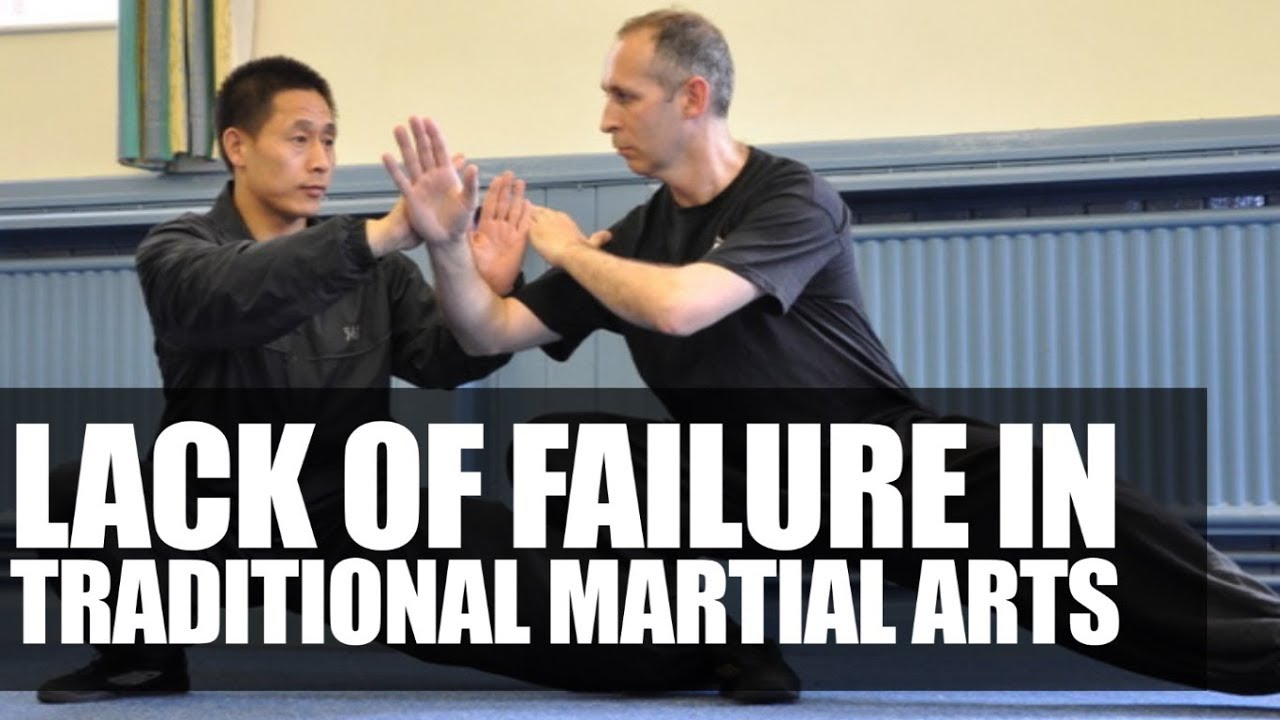
#martialarts We all experience failing when we start discovering Martial Arts, which has a humbling impact. As you progress in Traditional Martial Arts frequently the failing price significantly lowers, potentially leading to terrible outcomes. Extra concerning that in this Martial Arts Journey video clip.
SIGN UP FOR see when the following video clips will certainly come out:
► http://bit.ly/1KPZpv0
If you desire to sustain this project and see even more of these videos check my Patreon web page:
► https://www.patreon.com/rokasleo
Examine the video which began all of it:
► https://youtu.be/0KUXTC8g_pk
Lack of Failure in Traditional Martial Arts
Exactly how numerous individuals really enable themselves to constantly fall short in order to progress? And also how can preventing failure affect our fighting styles training?
Hi, my name is Rokas and in this Martial Arts Journey video clip we will certainly have a look at the Lack of Failure in Traditional Martial Arts as well as just how it influences our growth.
Prior to we begin however, I would such as to specify what I indicate by claiming Traditional Martial Arts, as there are a number of possible analyses to it and also reviewing a topic while having various analyses of the same term may lead to a great deal of misunderstanding. I do not mean to claim that I believe various other definitions to be wrong, yet the one that I will share with you confirmed to be the most reliable to me directly when questioning standard fighting styles and also attempting to recognize the entire topic.
To me, standard martial arts are fighting styles which are greatly focused on tradition, instead of practicality as its primary goal. While not always – this emphasis on custom is commonly associated to numerous cultural aspects. To offer some examples I’ll ask some questions. Why do the majority of Japanese fighting styles colleges educate to remain on the knees? Is it since it’s the healthiest method to rest? Or is it since it’s part of the Japanese society? Why do Bujinkan (commonly described as Ninjutsu) professionals normally put on black Gis? Is it due to the fact that black is extra functional for being less visible while training? Or is it rather due to the fact that it suggests to ninjutsu specialists on certain occasions in the past prefering to put on black to disguise themselves? How around protecting from a Japanese sword? Is it likely to be assaulted by one nowadays? Or is it experienced since it was more probable to take place in Japanese society 400 years earlier?
There is a tale of Jigoro Kano, owner of Judo, telling that he started decreasing the amount invested in newaza, grappling on the ground, due to the fact that in his viewpoint, to estimate him: “Humans were indicated to stroll, not crawl”, which is in fact a depiction of the Japanese cultural way of thinking. This attitude was handed down from generation to generation also till today, as newaza in Judo is even more of a side, than key focus. The concern is, is it so due to the fact that it’s – quote on quote – not practical or much less vital, or is it because it’s component of the custom? On the other hand the Gracie household began off training Judo, which back then was still more frequently known as Jiujitsu, yet Brazilians are notorious for not caring much for tradition and authority. They did not problem themselves with such beliefs as not “creeping on the ground” and while they kept a couple of, small traditions, such as using the Gi (which has functional elements too), they concentrated mainly on usefulness and effectiveness, which made Brazilian Jiu Jitsu among the most commonly identified reliable fighting styles today. A lot more examples can be provided, but as you might see, traditional martial arts often tend to have a high emphasis on preserving custom as well as often even giving up virtually and also efficiency to do so, frequently times doing so unconsciously.
To summarize, one definition of traditional martial arts may be closely related to the heavy investment of a certain martial art right into practices, such as Aikido, Bujinkan, Wing Chun, numerous styles of Kung Fu, Tae Kwon Do as well as more versus other methods which are more concentrated on practicality such as Brazilian Jiu Jitsu, Wrestling, Muay Thai, Boxing and also Kick Boxing. This is not to claim that methods concentrated on effectiveness do not have practices or “restrictions”, as an example boxing concentrating on striking only and also ignoring wrestling or kicking. It’s investment right into traditions is much less considerable than that of typical martial arts. It is additionally fascinating to direct out, that the age of the martial art is not of best value here. As for instance Aikido, generally described as a typical martial art, being in fact fairly young – formally developed in 1942, contrasted to Brazilian Jiu Jitsu which is not referred to as a typical martial art – having been developed around a comparable time.
Currently with every one of that in mind, having a solitary interpretation of standard martial arts for this discussion, we might start checking out just how lack of failing may impact a typical martial arts professional.
Related Posts
-
 FAME 10: MEDIA TRENING I CEREMONIA WAŻENIA (+TURNIEJ: ROAD TO ARMIA)
-
 MMA Community Reacts to Ben Askren getting Choked-Out by Demian Maia,UFC Singapore Results
-
 Martial Arts Reigns (Chapter 108 English Subs)
-
 WT WORLD TAEKWONDO GRAND PRIX 2018 Day 3 Session 2 Court 2
-
 UFC 229: Khabib vs. McGregor Post-Fight Show – MMA Fighting
-
 THE BEST JASON JACKSON HIGHLIGHTS | BELLATOR MMA
About The Author

Dojo
Taekwondo (English pronunciation /ˌtaɪˌkwɒnˈdoʊ/ or (thai-KWAN-doh): also transcribed as Taekwon-Do or Tae Kwon Do) is a Korean martial art with a heavy emphasis on kicks. Taekwondo was developed during the 1940s and 1950s by various Korean martial artists, as a blend of the indigenous Korean fighting styles of taekkyeon, gwonbeop, and subak, with influence from foreign martial arts, such as Karate and Chinese martial arts.
